Combination skin is the most commonly reported skin type, yet it is also one of the most challenging to understand and care for. The defining characteristic of combination skin is the simultaneous presence of distinctly different skin conditions in different facial zones: typically, an oily, enlarged-pore, breakout-prone T-zone (forehead, nose, and chin) alongside relatively drier, sometimes tight, or normally-behaved cheeks. This variability makes universal product recommendations inadequate — what controls oil in the T-zone may worsen dryness on the cheeks, and what sufficiently moisturizes the cheeks may cause congestion in the T-zone.
Understanding Why Combination Skin Occurs
The uneven distribution of sebaceous glands across the face explains combination skin's characteristic pattern. The T-zone — the central panel of the face including the forehead, nose, and chin — has the highest density of sebaceous glands in the entire body. When these glands are physiologically active (influenced by genetics, hormones, and environmental factors), they produce more sebum than the relatively sparse sebaceous glands of the cheeks and outer facial zones. The result is the central oiliness and peripheral normal-to-dryness that characterizes combination skin.
Hormonal influences also play a role — androgens stimulate sebaceous gland activity, and their effects are most pronounced where gland density is highest (the T-zone). Stress, diet, seasonal changes, and certain medications can shift the balance between zones, making combination skin a dynamic condition that may lean more oily in summer or during periods of stress and more dry in winter or post-adolescence.
Identifying Your Combination Skin Pattern
Not all combination skin is identical. Take note of your skin's behavior throughout the day: Do you need to blot your nose and forehead by midday while your cheeks still feel comfortable? Do your cheeks feel tight and dry after washing while your T-zone feels oily within hours? Do you experience breakouts primarily on your nose, chin, and forehead while your cheeks remain clear? If yes to two or more of these, you have combination skin. The degree of contrast between zones varies — some people have very oily T-zones with very dry cheeks (pronounced combination), while others have a mildly oily T-zone with normal cheeks (mild combination). Identifying your specific pattern guides product and technique choices.
Cleansing for Combination Skin
Cleansing is where combination skin care most commonly goes wrong. Using a cleanser designed for oily skin — typically a foaming formula with sulfates — removes oil effectively from the T-zone but strips the already-marginal moisture from the cheeks, causing dryness, tightness, and sensitivity in those areas. Using a creamy cleanser designed for dry skin leaves the T-zone under-cleansed and congestion-prone.
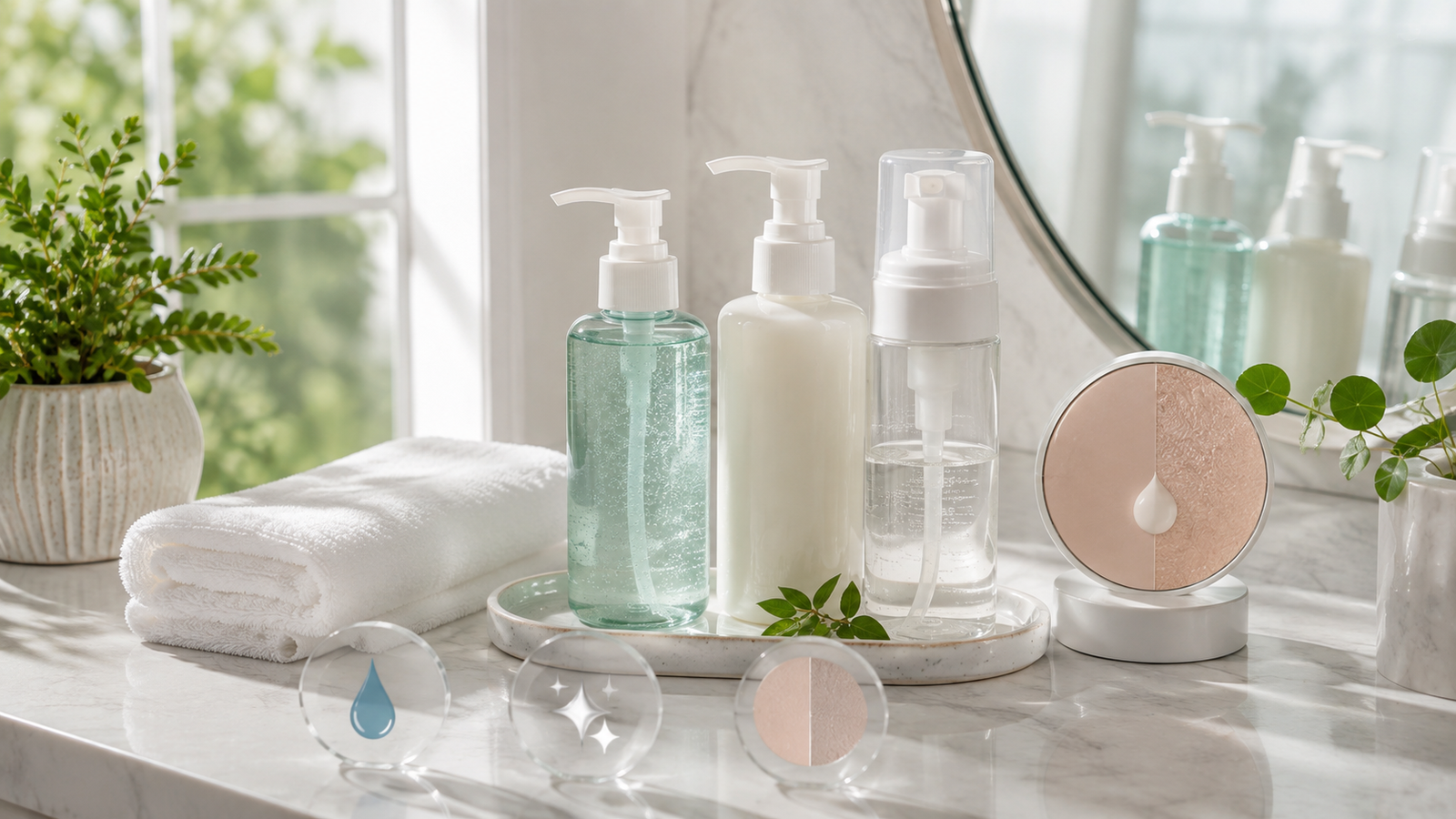
The ideal cleanser for combination skin is a gentle, pH-balanced formula that removes excess sebum and impurities without stripping — typically a non-foaming gel or a very light foam that does not contain SLS/SLES. Cleanse once in the evening (double cleanse if wearing SPF/makeup) and simply rinse with lukewarm water in the morning to preserve the overnight natural balance. Apply cleanser with gentle circular motions, paying slightly more attention to the T-zone without over-massaging the cheeks.
Toning for Combination Skin
Avoid alcohol-based toners — they strip oil from the T-zone (causing rebound sebum production) while worsening dryness on the cheeks. Choose a balancing, hydrating toner containing ingredients that benefit both zones: niacinamide (regulates sebum in the T-zone, supports barrier in dry areas), hyaluronic acid (provides lightweight hydration without heaviness), and green tea or centella asiatica extract (anti-inflammatory benefits for the whole face). Apply all over the face — the goal is a unified, balanced skin environment rather than treating zones as completely separate entities.
Moisturizing for Combination Skin
The moisturizer challenge for combination skin is finding a formula that is lightweight enough not to congest the T-zone while providing sufficient hydration for the cheeks. For most combination skin types, a gel-cream moisturizer — hydrating enough for the cheeks, light enough for the T-zone — is the best all-over choice. Look for non-comedogenic formulas with hyaluronic acid, glycerin, niacinamide, and ceramides. If your cheeks are quite dry, consider applying a slightly richer cream only to the cheek area as a targeted treatment, topped with SPF all over.
Zone-specific moisturizing — applying a lightweight gel moisturizer to the T-zone and a richer cream to the cheeks simultaneously — is a more advanced technique that provides truly customized hydration. Many combination skin people find this approach provides better overall balance than any single formula applied uniformly.
Targeted T-Zone Treatment
The T-zone may benefit from additional targeted treatment not needed on the drier cheek area. A BHA (salicylic acid 1–2%) toner or serum applied only to the nose, forehead, and chin 2–3 times weekly keeps pores cleansed, reduces congestion, and prevents blackheads without over-drying the whole face. Clay masks applied only to the T-zone 1–2 times weekly provide deeper pore cleansing and oil absorption without the mattifying effect that would worsen cheek dryness.
Sun Protection for Combination Skin
Choose a broad-spectrum SPF 30–50 with a lightweight, non-comedogenic formula. Many modern sunscreens are designed for combination skin — look for "oil-free," "mattifying," or "lightweight" descriptors. Fluid sunscreens, water-based SPF formulas, and gel-textured sunscreens are typically well-tolerated. Apply evenly all over the face — different SPF formulas should not be used on different zones of the face as this creates uneven protection and complex layering.
Active Ingredients for Combination Skin
Niacinamide (4–10%): The ideal multi-benefit active for combination skin — regulates sebum in oily zones, supports barrier in dry zones, minimizes pores, and brightens overall. Suitable for twice-daily use all over the face. Salicylic Acid (1–2%): Best applied selectively to oily/congested T-zone areas 2–3 times weekly. Prevents comedones and maintains clean pores without over-drying. Hyaluronic Acid: Provides lightweight, oil-free hydration suitable for all zones. Apply to damp skin to maximize humectant effects. Retinol: Suitable for the whole face at appropriate low concentrations for combination skin — addresses both T-zone acne and cheek aging simultaneously. Start with 0.025% and introduce gradually 2–3 nights weekly. Glycolic or Lactic Acid: Light exfoliation 1–2 times weekly improves texture and tone across all zones. Choose 5–8% concentrations for all-over use on combination skin.
Seasonal Adjustments
Combination skin often shifts significantly with seasons. In summer, heat and humidity increase T-zone oiliness — switching to lighter moisturizers, more frequent exfoliation, and possibly a mattifying SPF helps manage this. In winter, cold weather and indoor heating reduces humidity, which can dry out the cheeks significantly while the T-zone remains oily. Switching to a slightly richer cheek moisturizer, a more hydrating toner, and increased overnight moisture support addresses winter combination skin challenges.
Conclusion
Combination skin is a dynamic, nuanced skin type that rewards a thoughtful, zone-aware approach. Rather than seeking a single product that perfectly addresses both oily and dry zones — which rarely exists — the most effective combination skin care involves a balanced core routine supplemented by strategic zone-specific targeted treatments. With the right formula choices, consistent application, and seasonal adjustments, combination skin can achieve beautiful balance: a clear, controlled T-zone and soft, hydrated cheeks working together for a naturally radiant complexion.