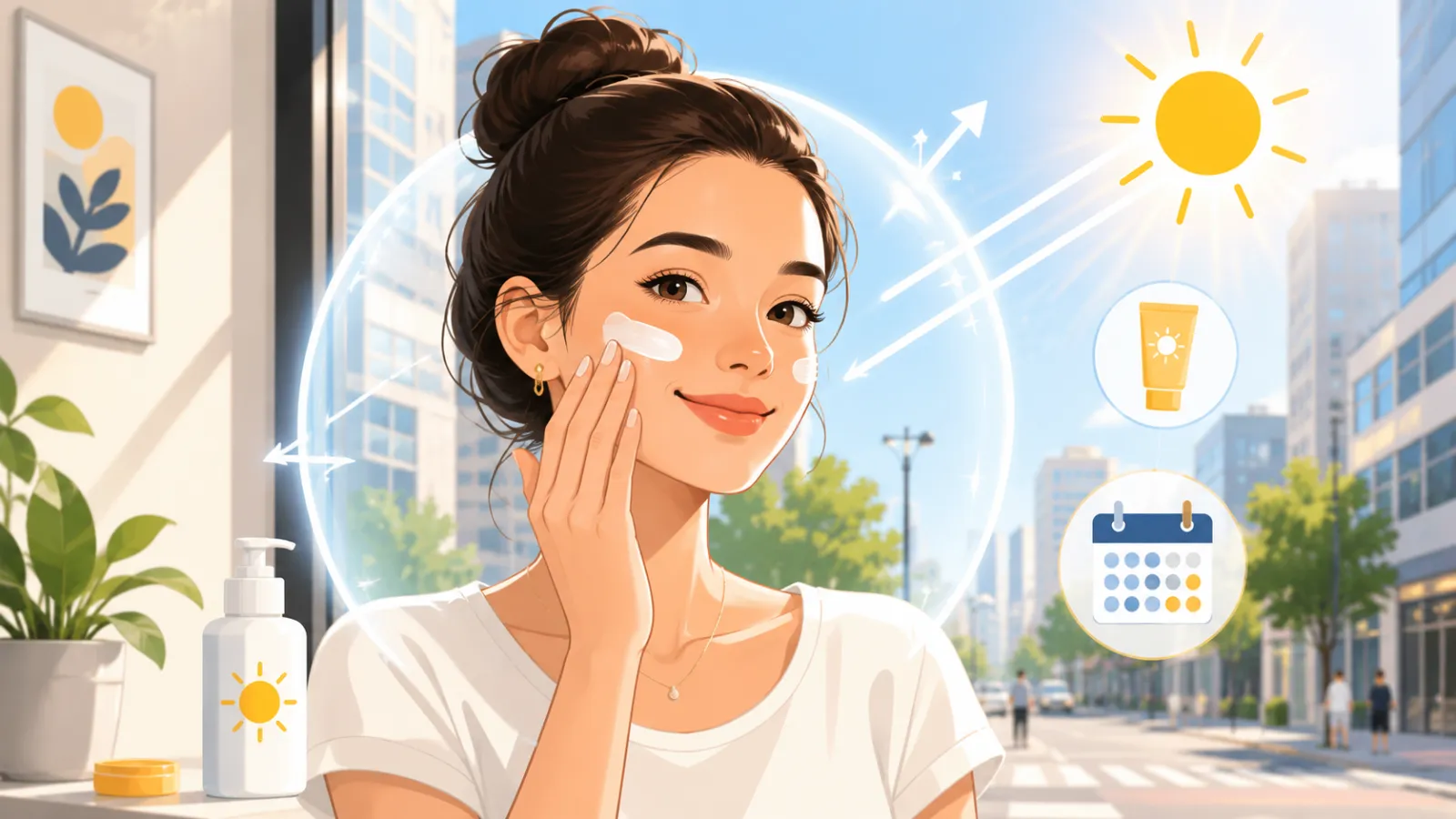
Sunscreen is not optional. It is the single most impactful skincare product available — more important than any serum, retinol, or vitamin C. UV radiation is the primary cause of premature skin aging (photoaging), responsible for up to 90% of visible changes including wrinkles, dark spots, uneven texture, and loss of elasticity. It is also the leading preventable cause of all three major types of skin cancer. Yet despite this clear evidence, sunscreen remains one of the most misunderstood and underused skincare products worldwide. This guide covers everything you need to know to use sunscreen correctly and consistently.
Understanding UV Radiation
The sun emits ultraviolet radiation across a spectrum. For skincare purposes, two types are most relevant: UVA and UVB rays. UVB rays are the shorter-wavelength, higher-energy rays that cause sunburn. They primarily damage the outermost layers of the skin and are the primary cause of skin cancer. UVB intensity varies with season, time of day, altitude, and latitude — it is strongest between 10am and 4pm during summer months. UVA rays have a longer wavelength and penetrate much more deeply into the dermis. They are responsible for photoaging — the wrinkles, dark spots, sagging, and loss of elasticity associated with sun exposure. UVA intensity remains relatively constant throughout the day and year, penetrates clouds and glass (windows), and is present even on overcast days. This is why sunscreen use is essential year-round and even indoors near windows.
What Does SPF Mean?
Sun Protection Factor (SPF) measures a sunscreen's ability to protect against UVB rays — specifically, how much longer you can stay in the sun without burning compared to unprotected skin. SPF 30 filters approximately 97% of UVB rays. SPF 50 filters approximately 98%. SPF 100 filters approximately 99%. The difference between SPF 30 and SPF 50 is less dramatic than the numbers suggest, but higher SPF does provide meaningfully more protection at the margins. For daily use, SPF 30 is the minimum recommended by skincare experts. For outdoor activities, swimming, or high UV environments, SPF 50 or higher is preferred.
Broad-Spectrum Protection
SPF alone only measures UVB protection. To be fully protected, you need a sunscreen labeled "broad-spectrum," which means it protects against both UVA and UVB rays. In the US, a broad-spectrum claim requires the sunscreen to pass an FDA-mandated UVA protection test. In Europe and Asia, sunscreens may carry additional UVA ratings like the PA+ system (used in Asia, where PA++++ is the highest protection) or the UVA circle logo (Europe).
Chemical vs. Mineral Sunscreens
Chemical (Organic) Sunscreens
Chemical sunscreen filters work by absorbing UV radiation and converting it to heat, which is then dissipated from the skin. Common chemical UV filters include oxybenzone, avobenzone, octinoxate, octocrylene, homosalate, and tinosorb (in Europe and Asia). Chemical sunscreens tend to be lightweight, cosmetically elegant, and easier to formulate without white cast — making them popular for everyday use and for people with darker skin tones. Some chemical filters (particularly oxybenzone) have raised concerns regarding hormonal disruption and marine ecosystem damage, though the evidence of harm at typical human exposure levels remains limited. Newer-generation filters like tinosorb and mexoryl (widely available outside the US) offer excellent broad-spectrum protection with improved safety profiles.
Mineral (Inorganic) Sunscreens
Mineral sunscreens use physical blockers — zinc oxide and/or titanium dioxide — that sit on the skin's surface and reflect/scatter UV radiation. Zinc oxide provides excellent broad-spectrum UVA+UVB protection. Titanium dioxide is primarily effective against UVB and short-wave UVA. Mineral sunscreens are non-irritating, suitable for sensitive and acne-prone skin, and are the recommended choice during pregnancy. Their main drawback is the white cast left by larger particle sizes. Modern formulations use micronized or nano-particle zinc oxide to reduce the white cast while maintaining protection, though some people with darker skin tones still find the residue visible.
How to Apply Sunscreen Correctly
Amount
Most people apply far too little sunscreen, which dramatically reduces the actual SPF protection received. For the face and neck, approximately a quarter teaspoon (1.25ml) or two finger lengths of sunscreen is the standard amount needed to achieve the labeled SPF. For the body, one ounce (30ml) — about a shot glass — is the recommended amount. Apply generously and evenly, covering all exposed areas including ears, neck, and the backs of hands.
Timing
Chemical sunscreens need 20–30 minutes to be fully absorbed and activated before sun exposure. Mineral sunscreens are effective immediately upon application. For daily routines, sunscreen should be applied as the very last step — after moisturizer, serum, and all other skincare products — before going outdoors.
Reapplication
Sunscreen protection diminishes over time through sweat, sebum, rubbing, and photodegradation. Reapply every 2 hours during direct sun exposure, immediately after swimming or heavy perspiration, and after towel drying. For desk workers spending most of the day indoors with limited UV exposure, morning application may be sufficient, but reapplication is still recommended if you step outside during peak hours.
Choosing the Right Sunscreen for Your Skin Type
Oily/Acne-Prone Skin: Choose lightweight, oil-free, non-comedogenic formulas. Gel, fluid, or water-based chemical sunscreens tend to work well. Look for formulas labeled "mattifying" or "oil-control."
Dry Skin: Choose moisturizing sunscreens with added hydrating ingredients like hyaluronic acid, ceramides, or glycerin. Cream or lotion textures provide both protection and moisture.
Sensitive Skin: Mineral sunscreens with zinc oxide are least likely to cause irritation. Avoid chemical filters like oxybenzone and fragrance in the formula.
Darker Skin Tones: Choose mineral formulas with micronized zinc oxide, tinted mineral sunscreens that blend with deeper skin tones, or elegant chemical formulas that leave no white cast.
Sunscreen Myths Debunked
"I don't need sunscreen on cloudy days." False. Up to 80% of UV rays penetrate through clouds. UVA in particular is largely unaffected by cloud cover.
"My foundation has SPF, so I'm covered." False. You would need to apply 7–10 times the normal amount of foundation to achieve the labeled SPF. Always layer a dedicated sunscreen underneath.
"I have dark skin and don't need SPF." False. While melanin provides some natural UV protection (estimated as natural SPF 8–13), this is insufficient to prevent long-term UV damage, photoaging, or hyperpigmentation. Everyone benefits from daily SPF use.
"Sunscreen is toxic." The limited evidence does not support avoidance based on toxicity concerns at typical use levels. The proven harms of UV exposure — skin cancer and photoaging — far exceed any theoretical risk from sunscreen ingredients.
Conclusion
Daily sunscreen use is the most evidence-backed skincare habit available. No product will reverse the effects of decades of unprotected sun exposure as effectively as consistent SPF use prevents them from occurring in the first place. Wear broad-spectrum SPF 30 or higher every morning, reapply when outdoors, and make it as non-negotiable as brushing your teeth. Your future self's skin will thank you.