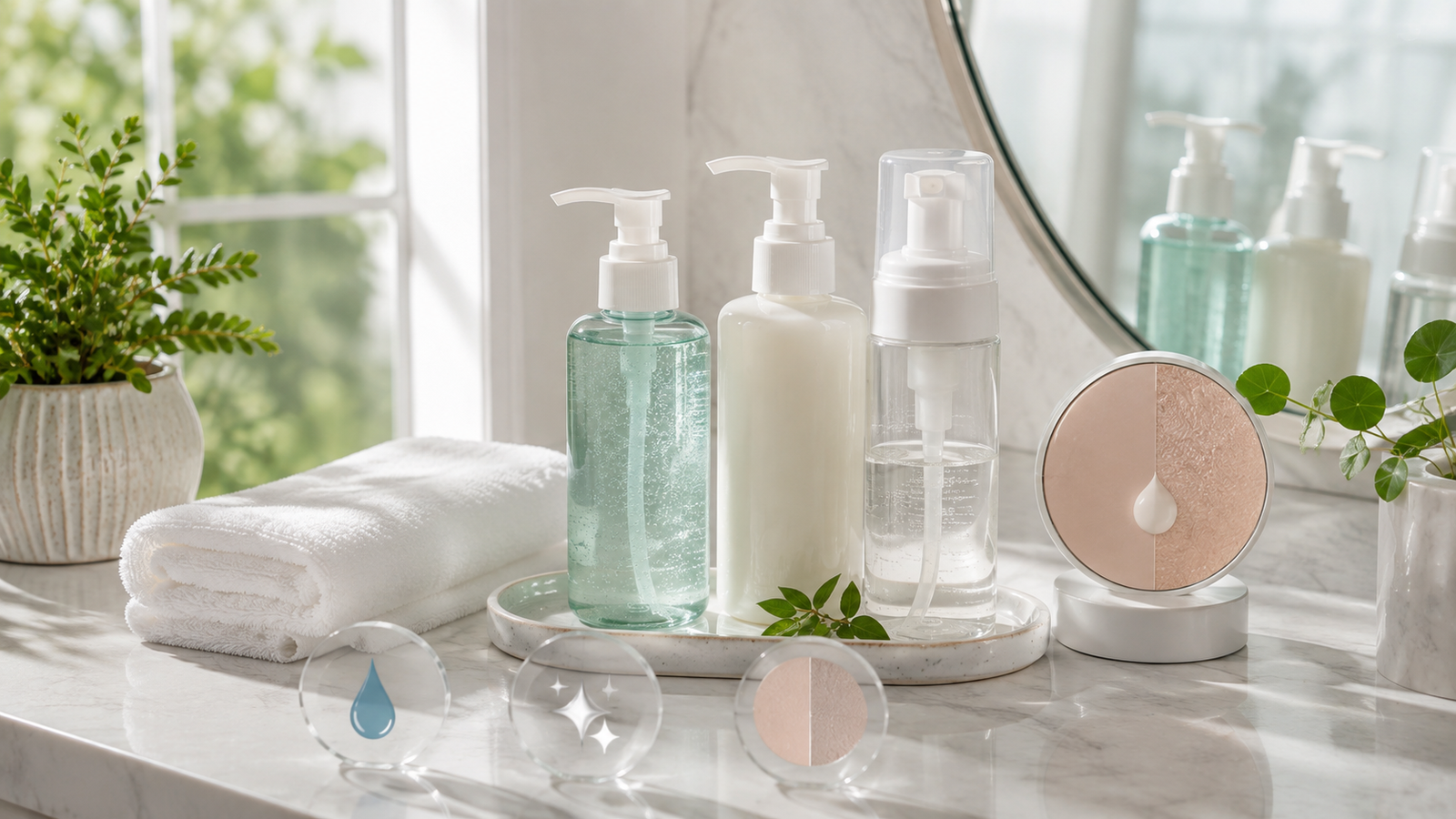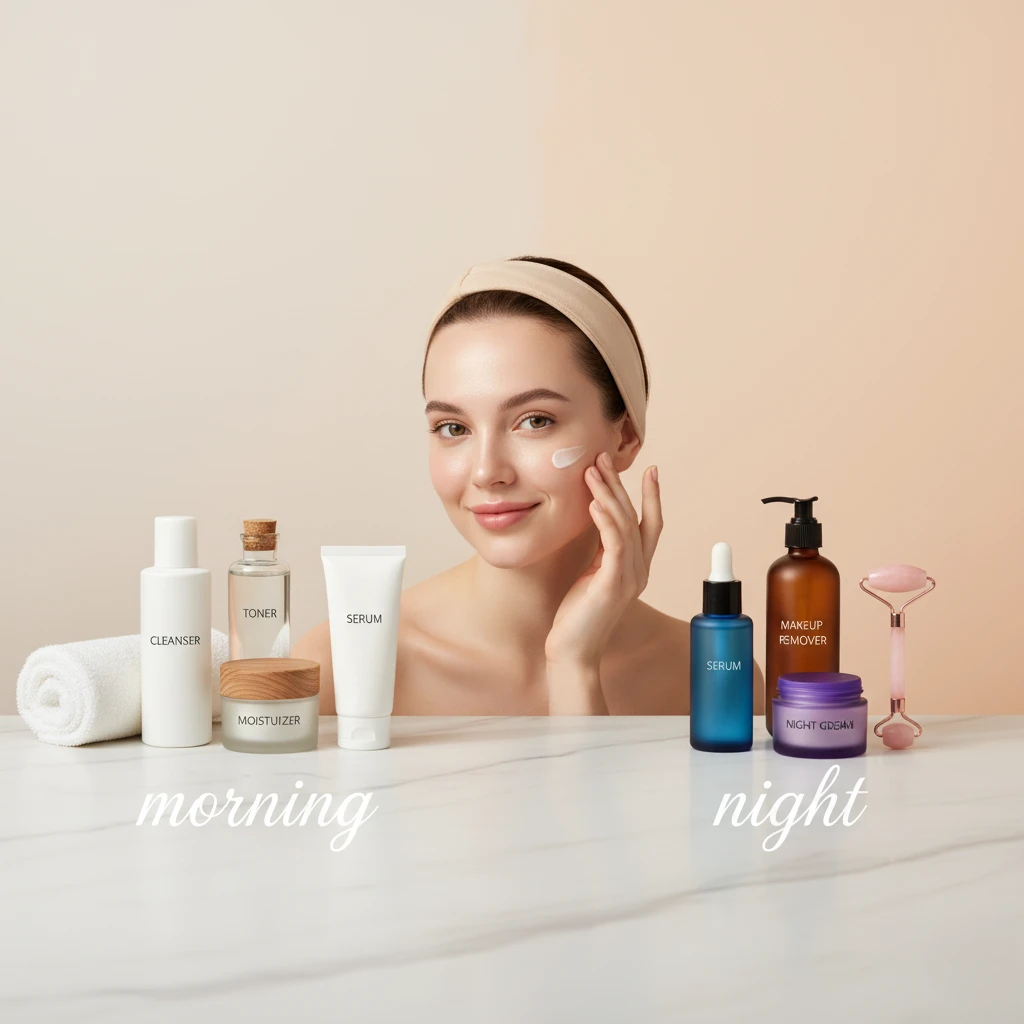
Achieving naturally glowing skin is not a matter of luck or genetics — it is the consistent result of a well-designed morning-to-night skincare routine that addresses your skin's evolving needs throughout the day. The skin's biological behavior changes significantly between morning and evening, and an optimal routine works in alignment with these natural rhythms rather than ignoring them. This guide covers every step of both the AM and PM routine with detailed explanations, tips for customization, and the science behind each product category.
Morning Routine: Protect and Brighten
The morning routine serves a fundamentally protective purpose. During the day, your skin faces UV radiation, environmental pollutants, and the free radicals they generate. Your AM routine should build a comprehensive defense against these insults while hydrating and preparing the skin for sun exposure.
Step 1: Gentle Morning Cleanse
Unless your skin is particularly oily or you wake up sweating, your face does not need an aggressive morning cleanse. Overnight, your skin produces sebum and regenerates — this natural barrier does not need to be stripped first thing in the morning. A gentle rinse with lukewarm water or a mild non-foaming cleanser removes any overnight product residue, nighttime perspiration, and residual oils without disrupting the barrier. Save the thorough cleanse for the evening. Choose a cleanser with a near-skin pH (around 5.5) — look for fragrance-free gel, cream, or micellar formulas.
Step 2: Hydrating Toner or Essence
Apply a hydrating toner immediately to damp skin after cleansing. This step replenishes moisture, rebalances pH after cleansing, and creates a primed, hydrated canvas for the actives to follow. Look for toners containing hyaluronic acid, glycerin, aloe vera, or niacinamide. Apply by pressing the product gently into skin with clean hands rather than wiping with a cotton pad — this is gentler, wastes less product, and allows more controlled application.
Step 3: Antioxidant Serum (Vitamin C)
The morning serum slot is the home of your antioxidant defense. Vitamin C — in the form of L-ascorbic acid (10–20%) or a stable derivative — is the most evidence-backed morning antioxidant. It neutralizes UV-induced free radicals, brightens existing hyperpigmentation, and stimulates collagen synthesis. Apply 3–4 drops to clean, dry skin and allow 60 seconds for full absorption before continuing. Other effective morning antioxidants include niacinamide (which also provides sebum control and barrier support), vitamin E, ferulic acid, and resveratrol.
Step 4: Eye Cream
The thin, delicate skin around the eyes shows signs of aging, fatigue, and dehydration earlier than any other facial zone. A targeted eye cream applied each morning addresses puffiness (look for caffeine, peptides), dark circles (vitamin C, vitamin K, caffeine), and fine lines (peptides, hyaluronic acid, retinol in eye-safe formulations). Apply with your ring finger using gentle tapping rather than rubbing motions around the orbital bone.
Step 5: Moisturizer
Apply your daytime moisturizer while the skin is still slightly damp from previous steps to maximize moisture retention. Your AM moisturizer should be appropriate for your skin type: lightweight gel or fluid texture for oily skin, cream for normal to dry skin, SPF-infused moisturizers for convenience. Key ingredients to look for: ceramides (barrier repair), hyaluronic acid (hydration), niacinamide (multi-benefit), and peptides (anti-aging support).
Step 6: Sunscreen (Essential)
Sunscreen is the most critical step of the morning routine — the one product that protects every investment made by all the previous steps. Apply broad-spectrum SPF 30 (minimum) or SPF 50 (preferred) as the very last step, at least 15–20 minutes before sun exposure. Use a full quarter-teaspoon for face and neck — most people use only 25–50% of the recommended amount, dramatically reducing actual protection. Reapply every 2 hours when outdoors, after swimming, or after visible sweating.
Midday Maintenance: Refresh and Reprotect
If you are spending extended time outdoors, reapplication of sunscreen is critical. SPF sprays or powder sunscreens applied over makeup make midday reapplication practical. A hydrating facial mist can refresh the skin and improve the application of powder SPF. Blotting papers or mattifying setting powders can manage excess shine without disturbing your sunscreen base.
Evening Routine: Repair and Renew
The evening routine serves a fundamentally different purpose than the morning routine: thorough cleansing to remove the day's accumulated environmental load, and targeted treatment with active ingredients that the skin processes most efficiently during overnight repair cycles.
Step 1: Oil Cleanser or Micellar Water
The first step of an evening double cleanse removes oil-soluble impurities — sunscreen (critical), makeup, sebum, and particulate pollutants that adhere to the skin's oily surface. An oil-based cleanser (cleansing oil, cleansing balm) or a micellar water dissolves these effectively without stripping. Massage gently for 60 seconds, paying attention to the hairline, jawline, and around the nose where product accumulates, then rinse thoroughly.
Step 2: Water-Based Cleanser
Follow the first cleanse with a gentle water-based cleanser to remove any remaining water-soluble residue and ensure a properly clean base for your evening actives. Choose based on skin type: gel cleansers for oily, cream cleansers for dry, foam cleansers for normal skin. The double cleanse ensures thorough removal without the harshness that would result from using a single strong cleanser.
Step 3: Exfoliant (2–3 Times Weekly)
On evenings designated for exfoliation (not on retinol nights), apply your chemical exfoliant after cleansing. For dull, uneven skin: glycolic acid (5–10%) or lactic acid (5–12%). For oily, congested skin: salicylic acid (1–2%). For sensitive skin: PHAs or mandelic acid. Leave the exfoliant on for the directed time or use a leave-on formula, then continue with the rest of your evening routine. Exfoliation accelerates cell turnover, brightens hyperpigmentation, and improves product penetration for subsequent steps.
Step 4: Essence or Hydrating Toner
Apply your hydrating essence or toner after any exfoliant to begin the layering of moisture and active ingredients. This step also provides a softened, primed surface for better absorption of serums and treatments.
Step 5: Treatment Serum
Evening is the prime time for targeted treatment serums. On non-exfoliant nights: retinol (0.025–1% depending on tolerance) for anti-aging, acne, and texture improvement. Niacinamide (5–10%) daily for barrier support, pore minimization, and brightening. Peptide serums nightly for collagen support. Hyaluronic acid serum for deep hydration layering. Bakuchiol (plant-derived retinol alternative) for those who cannot tolerate retinol. Apply in order of thinnest to thickest consistency and allow each to partially absorb before applying the next.
Step 6: Eye Cream
Apply your PM eye cream — which can be richer and more treatment-focused than your AM version. Look for peptides, retinol (eye-safe formula), caffeine, and ceramides for anti-aging, firmness, and barrier repair around the delicate eye area.
Step 7: Night Cream or Moisturizer
Night creams can be richer than day creams without concern for heaviness under makeup. Look for formulas containing ceramides, peptides, shea butter, squalane, and occlusives that lock in overnight hydration. Apply to slightly damp skin for maximum moisture retention. Sleeping masks — applied as the final step 2–3 times weekly — provide an intensive overnight moisture and active treatment layer.
Step 8: Face Oil or Slugging (Optional)
For very dry skin, adding a facial oil (rosehip, squalane, argan) or a final thin layer of petrolatum (slugging) as the absolute last step creates an occlusive seal that dramatically reduces overnight TEWL and amplifies the hydrating effects of all products applied underneath.
Weekly Additions
Incorporate a clay or enzyme mask 1–2 times weekly for deep pore cleansing. A brightening sheet mask post-exfoliation amplifies radiance. A hydrating mask or overnight sleeping mask provides intensive moisture correction when needed.
Conclusion
The perfect skincare routine is one that is consistent, appropriately targeted to your skin's actual needs, and enjoyable enough to maintain long-term. Every step of this morning-to-night protocol serves a specific, evidence-based purpose — and together, they create a comprehensive system that addresses every dimension of skin health. Follow it consistently over weeks and months, and naturally glowing, healthy skin will be the inevitable result.