Skincare is not purely a physical practice. It is deeply psychological — woven into our sense of identity, social confidence, emotional regulation, and relationship with ourselves. The products we choose, the routines we build, the feelings we have when we look in the mirror — all of these reflect and reinforce psychological patterns that influence both the effectiveness of our skincare and our overall wellbeing. Understanding the psychology of skincare can help you build habits that are genuinely health-promoting rather than anxiety-driven, and develop a compassionate relationship with your skin that supports long-term wellness.
Skin and Self-Identity
The skin is our most publicly visible organ — the surface through which we meet the world and through which the world perceives us. It is deeply intertwined with self-identity, social belonging, and perceived attractiveness. Research in social psychology consistently shows that skin appearance significantly influences first impressions, social confidence, and perceived health and competence. People with visible skin conditions — acne, eczema, rosacea, psoriasis, vitiligo — report significantly higher rates of social anxiety, reduced self-confidence, avoidance of social situations, and difficulties in professional and romantic relationships than those without visible skin conditions.
This social dimension of skin health is not superficial — it has real consequences for quality of life. Studies measuring the quality-of-life impact of skin conditions consistently show that moderate-to-severe acne, psoriasis, and eczema affect psychological wellbeing as significantly as other chronic diseases including diabetes and heart disease. Recognizing this validates the legitimacy of caring about your skin and seeking effective treatment, while also highlighting the importance of psychological support alongside physical treatment.
Skin Anxiety and Over-Treatment
The modern skincare information environment — characterized by social media, influencer marketing, constant product launches, and often-contradictory advice — has created a new phenomenon: skincare anxiety. People feel overwhelmed by the number of products they "should" be using, anxious about whether they are doing enough, and insecure about imperfections that were previously accepted as normal variation. This anxiety drives several counterproductive behaviors: over-treating the skin with too many active ingredients simultaneously (causing barrier damage), frequent product switching before allowing sufficient time to see results, skin checking obsession (examining the skin multiple times daily under harsh lighting), and spending beyond one's means on skincare driven by insecurity rather than genuine need.
Signs that your skincare relationship may have crossed from health-promoting to anxiety-driven include: feeling significant distress when you run out of a product; spending excessive time thinking about or planning your skincare routine; checking your skin in mirrors or cameras multiple times per day with accompanying distress; continuing to purchase new products despite an already extensive collection; and feeling that your mood for the day is significantly determined by how your skin looks in the morning. If several of these resonate, refocusing on simplicity, evidence-based choices, and self-compassion can help recalibrate.
Body Dysmorphic Disorder and Skin
Body dysmorphic disorder (BDD) is a psychological condition characterized by obsessive preoccupation with perceived flaws in physical appearance — often subtle or invisible to others. Skin-related BDD is particularly common, with concerns typically focused on perceived acne, pores, symmetry, or skin texture. People with skin-related BDD may spend hours examining their skin daily, seek repeated reassurance from others, undergo repeated cosmetic procedures, and experience significant functional impairment from their skin-related thoughts. If preoccupation with skin appearance is consuming more than 1–2 hours daily, causing significant distress, and preventing normal functioning, professional evaluation for BDD or related anxiety disorders is recommended. BDD is effectively treated with CBT and medication, and is a genuine mental health condition deserving compassionate professional support.
The Ritual Value of Skincare
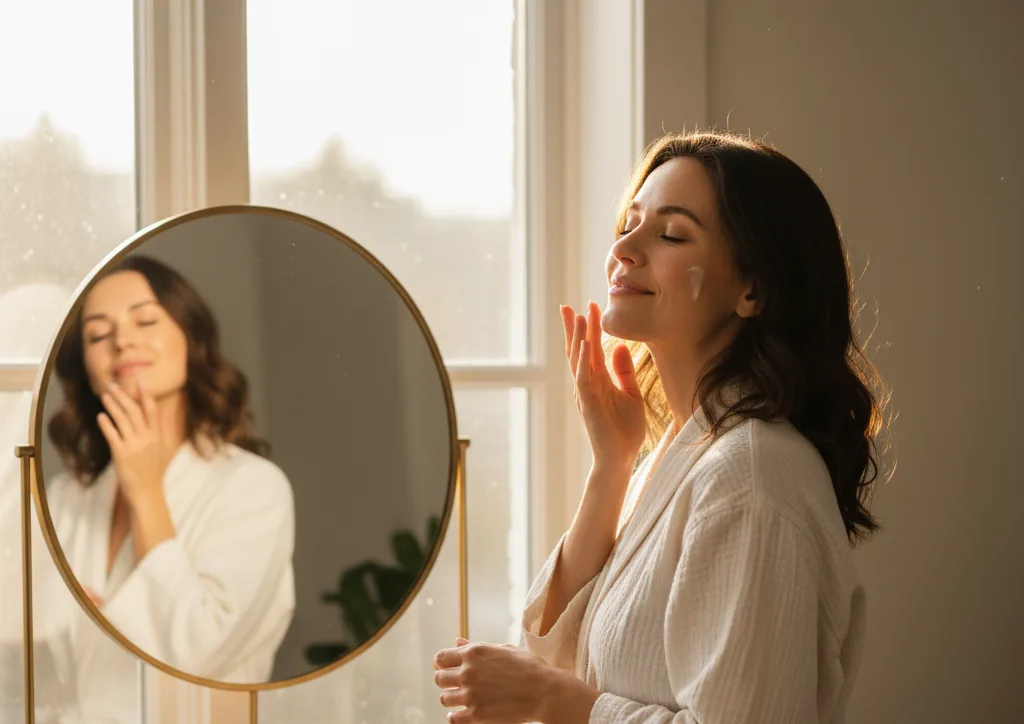
Not all psychological aspects of skincare are problematic. Healthy skincare routines can serve as powerful self-care rituals that provide structure, predictability, and a regular opportunity for self-nurturing — all of which support psychological wellbeing. Research on daily rituals shows that consistent, intentional personal care practices reduce anxiety, improve sense of control, and enhance self-esteem. When the motivation behind a skincare routine is genuine self-care — caring for the body as an act of respect and kindness — rather than anxiety-driven damage-control or social performance, the psychological benefits of the practice amplify its physical benefits through the stress-reduction pathways discussed earlier in this series.
The key distinction is motivation: Is your skincare routine a source of calm and self-connection, or a source of anxiety and compulsive behavior? Are you making informed, intentional product choices, or impulse-purchasing driven by fear of missing out or social media anxiety? Do you feel fundamentally okay about your skin between routines, or are you constantly monitoring and evaluating? These questions point toward the psychological relationship with skincare that determines whether the practice is genuinely health-promoting.
Skin-Positive Psychology: Developing a Healthy Relationship with Your Skin
Practice Self-Compassion
Self-compassion — treating yourself with the same kindness and understanding you would extend to a close friend — is one of the most evidence-based practices for improving psychological wellbeing and reducing appearance-related anxiety. When you notice critical thoughts about your skin in the mirror, practice acknowledging them without judgment and redirecting toward acceptance: "I am noticing I am feeling critical of my skin right now. My skin is doing its best. It deserves kindness, not criticism."
Reframe Perfection
Visible pores, occasional breakouts, faint asymmetry, and texture variation are normal features of human skin — not flaws to be corrected. The "glass skin," "pore-less," and "flawless" ideals promoted on social media represent heavily filtered and edited images that create impossible standards. Consciously reframing these ideals — recognizing that healthy skin and perfect skin are different things, and that healthy is both achievable and sufficient — reduces appearance-related anxiety and supports better psychological and physical skin health simultaneously.
Focus on Function, Not Perfection
Shift your skincare framework from "How can I make my skin look perfect?" to "How can I keep my skin healthy and functioning optimally?" This functional orientation — protecting the barrier, maintaining hydration, preventing UV damage, supporting cell renewal — is both more achievable and more rewarding than pursuing perfection, and paradoxically often produces better aesthetic results because it addresses root causes rather than symptom suppression.
Curate Your Information Environment
Unfollow social media accounts that consistently make you feel inadequate, anxious, or compelled to purchase. Follow skincare experts, evidence-based skincare educators, and skin-positive advocates who promote realistic skin imagery and informed, evidence-based skincare rather than anxiety-driven consumption. Your information environment directly shapes your psychological relationship with your skin — curate it with care.
Conclusion
The healthiest skincare routine is built on a foundation of self-knowledge, self-compassion, and genuine care for your skin's wellbeing — not on anxiety, perfectionism, or social comparison. When you understand the psychological dimensions of your skincare practice, you can make intentional choices that serve both your skin and your mental health simultaneously. Beautiful skin is not the absence of imperfection — it is the expression of consistent, informed, compassionate care applied with patience over time.