Ayurveda — the ancient Indian system of medicine and wellness — has guided skin care practices for over 5,000 years. Long before the modern skincare industry existed, Ayurvedic practitioners understood that beautiful skin is the outward expression of inner balance: the right diet, daily rhythms, herbal preparations, and lifestyle practices aligned with one's individual constitution. Today, as evidence-based research increasingly validates many Ayurvedic principles and ingredients, this timeless wisdom is experiencing a profound renaissance in modern skincare.
The Ayurvedic Understanding of Skin
In Ayurveda, the skin (tvak) is considered one of the primary organs of sense and is governed by the three doshas — Vata, Pitta, and Kapha — which are fundamental energy principles that regulate all biological processes. Each person has a unique constitution (prakriti) determined by the relative proportion of these three doshas, and skin health is understood as a reflection of doshic balance. When doshas are in balance, the skin is healthy, radiant, and resilient. When imbalanced (vikriti), specific skin problems arise that correspond to the disrupted dosha.
Understanding Skin Through the Dosha Lens
Vata Skin Type
Vata skin is characterized by delicateness, dryness, fine pores, tendency toward fine lines and premature aging, and sensitivity to cold and wind. Vata imbalance manifests as extreme dryness, flakiness, premature wrinkles, and a dull, lack-luster complexion. Vata skin needs rich, grounding, nourishing care: heavy oils like sesame, almond, and avocado; warming herbs like ashwagandha and shatavari; warm, oil-rich foods; regular self-massage (Abhyanga); and protection from cold and dry environments.
Pitta Skin Type
Pitta skin has medium thickness, good circulation producing a natural warm glow, tendency to sensitivity, redness, and inflammatory reactions. Pitta imbalance manifests as rosacea, acne, hyperpigmentation, sunburn susceptibility, and inflammatory flares. Pitta skin needs cooling, calming care: rose water, sandalwood, neem, aloe vera, and coconut oil; cooling herbs like coriander and fennel; cooling, anti-inflammatory foods; avoidance of spicy foods, alcohol, and sun exposure during peak hours.
Kapha Skin Type
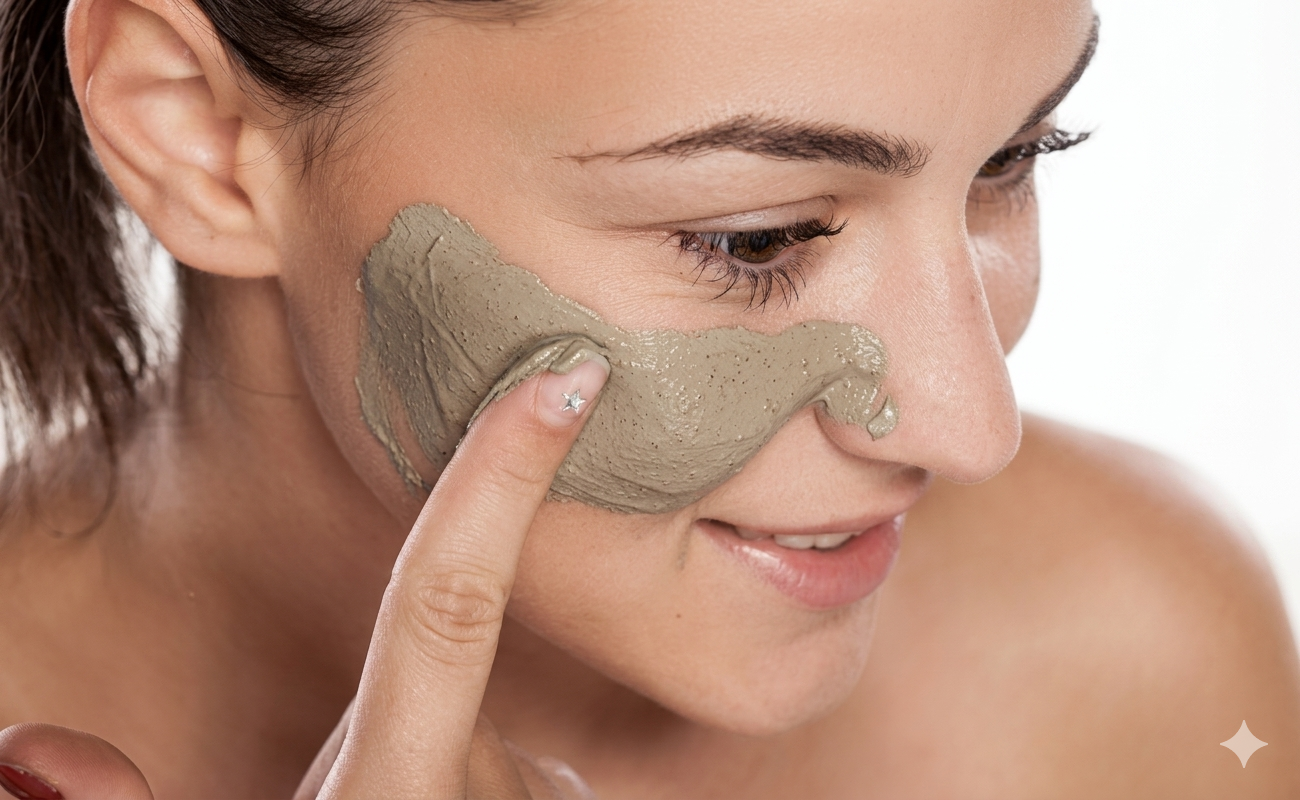
Kapha skin is typically thick, oily, smooth, and prone to larger pores, congestion, blackheads, and excess shine. Kapha imbalance manifests as oily congested skin, blackheads, whiteheads, and a heavy dull complexion. Kapha skin benefits from stimulating, cleansing, and astringent care: clay masks, dry brushing, light oils like jojoba, stimulating herbs like turmeric and ginger, and regular exfoliation with chickpea flour (besan).
Powerful Ayurvedic Ingredients for Modern Skincare
Turmeric (Curcuma Longa)
Turmeric is arguably Ayurveda's most celebrated skin ingredient. Its active compound curcumin is a potent antioxidant and anti-inflammatory that has been validated in numerous clinical studies for skin benefits. Curcumin inhibits melanin synthesis (brightening effect), reduces inflammation in acne and rosacea, promotes wound healing, and provides antioxidant protection against UV-induced damage. Traditional Ayurvedic skin preparations use turmeric in face masks with milk or yogurt, in ubtan (herbal body scrubs), and in golden milk preparations for internal consumption. Modern formulations include turmeric in serums, cleansers, and masks with careful delivery systems to maximize bioavailability while minimizing the yellow staining issue.
Neem (Azadirachta Indica)
Called the "village pharmacy" in India, neem has powerful antibacterial, antifungal, antiviral, and anti-inflammatory properties. Its active compounds — nimbin, nimbidin, and nimbidol — inhibit the growth of acne-causing bacteria, reduce sebum production, and soothe inflammatory skin reactions. Neem oil and neem leaf powder have been used for centuries to treat acne, eczema, psoriasis, and fungal skin infections. Modern research supports its antibacterial and wound-healing properties. Neem oil is best diluted (2–3% in a carrier oil) as it is potent and can cause irritation at full strength.
Manjistha (Rubia Cordifolia)
Manjistha is Ayurveda's premier blood-purifying herb with profound skin benefits. It is a powerful antioxidant, anti-inflammatory, and skin brightener that traditional Ayurvedic practitioners have used for thousands of years to treat hyperpigmentation, uneven skin tone, acne, and inflammatory skin conditions. Modern research confirms its inhibitory effects on melanin synthesis pathways and its anti-inflammatory properties. Available as powder for DIY face masks or in Ayurvedic skin formulations.
Saffron (Crocus Sativus)
Saffron has been used in Ayurvedic beauty preparations for millennia as a skin brightener and complexion enhancer. Its bioactive compounds — crocin, crocetin, and safranal — inhibit melanogenesis, provide antioxidant protection, and improve skin tone and radiance. A small amount of saffron infused in milk or rose water and applied as a face mask is a traditional Ayurvedic practice for brightening and evening the complexion. Modern research validates its melanin-inhibiting properties and antioxidant capacity.
Rose (Rosa Damascena)
Rose water and rose essential oil have been fundamental to Ayurvedic skin care for thousands of years. Rose water is a natural skin toner that balances pH, provides gentle astringency, delivers anti-inflammatory and antioxidant phytochemicals, and has a calming, cooling effect particularly suited for Pitta skin types. Rose hip oil (from the fruit of the rose plant) is rich in vitamin C, vitamin A (as beta-carotene and retinol precursors), and linoleic acid — providing brightening, anti-aging, and barrier-repairing benefits in a luxurious face oil.
Ashwagandha (Withania Somnifera)
As an adaptogenic herb, ashwagandha supports the body's stress response system, reducing cortisol levels and improving stress resilience. Since cortisol is one of the primary drivers of skin aging, acne, and inflammatory skin conditions, ashwagandha's cortisol-modulating properties indirectly but significantly benefit skin health. It can be taken internally as a supplement or added to golden milk preparations. Topically, ashwagandha has antioxidant and collagen-stimulating properties shown in preliminary research.
Dinacharya: The Ayurvedic Daily Routine for Radiant Skin
Ayurveda emphasizes dinacharya — a daily routine aligned with natural circadian rhythms — as the foundation of sustained health and beauty. Rising with or before the sun, scraping the tongue (jihwa prakshalana) to remove overnight bacterial accumulation, drinking warm lemon water to activate digestion and lymphatic drainage, practicing oil pulling (kavala) for oral and systemic health, and performing Abhyanga (self-massage with warm oil) are Ayurvedic morning rituals with complementary benefits for skin health.
Abhyanga — the practice of massaging warm sesame or dosha-appropriate oil into the skin before bathing — is perhaps the most immediately skin-relevant Ayurvedic practice. It nourishes the skin barrier, improves circulation, supports lymphatic drainage, reduces Vata-related dryness, promotes relaxation (reducing cortisol), and in Ayurvedic tradition, maintains the integrity of the skin's natural oil production. Modern research supports its benefits for reducing TEWL, improving skin softness, and promoting the parasympathetic nervous system activation that reduces stress-related skin inflammation.
Ayurvedic Diet for Radiant Skin
Ayurveda regards food as the most fundamental medicine and treats dietary choices as directly responsible for skin quality. General Ayurvedic dietary principles for radiant skin include: eating warm, freshly cooked foods that are easy to digest; prioritizing seasonal, locally grown produce; including healthy fats in every meal (ghee, coconut oil, sesame oil, nuts and seeds); avoiding cold, processed, and incompatible food combinations (such as milk with sour fruits); eating according to digestive capacity (avoiding heavy meals when digestion is weak); and including skin-supporting spices such as turmeric, cumin, coriander, fennel, and ginger in daily cooking.
Conclusion
Ayurveda offers a comprehensive, individualized, and deeply ecological approach to skin health that addresses the whole person — constitution, diet, daily rhythms, seasonal adjustment, and emotional balance. Its ingredients and practices have stood the test of millennia, and modern science is increasingly finding the evidence base that validates what Ayurvedic practitioners have known all along: that the most radiant skin is the expression of a life lived in balance with nature, with nourishing food, restful sleep, managed stress, and daily ritual care. Incorporating even a few Ayurvedic principles and ingredients into your modern skincare practice can produce remarkable results — with the added benefit of a deeper connection to one of humanity's oldest and most sophisticated wellness traditions.