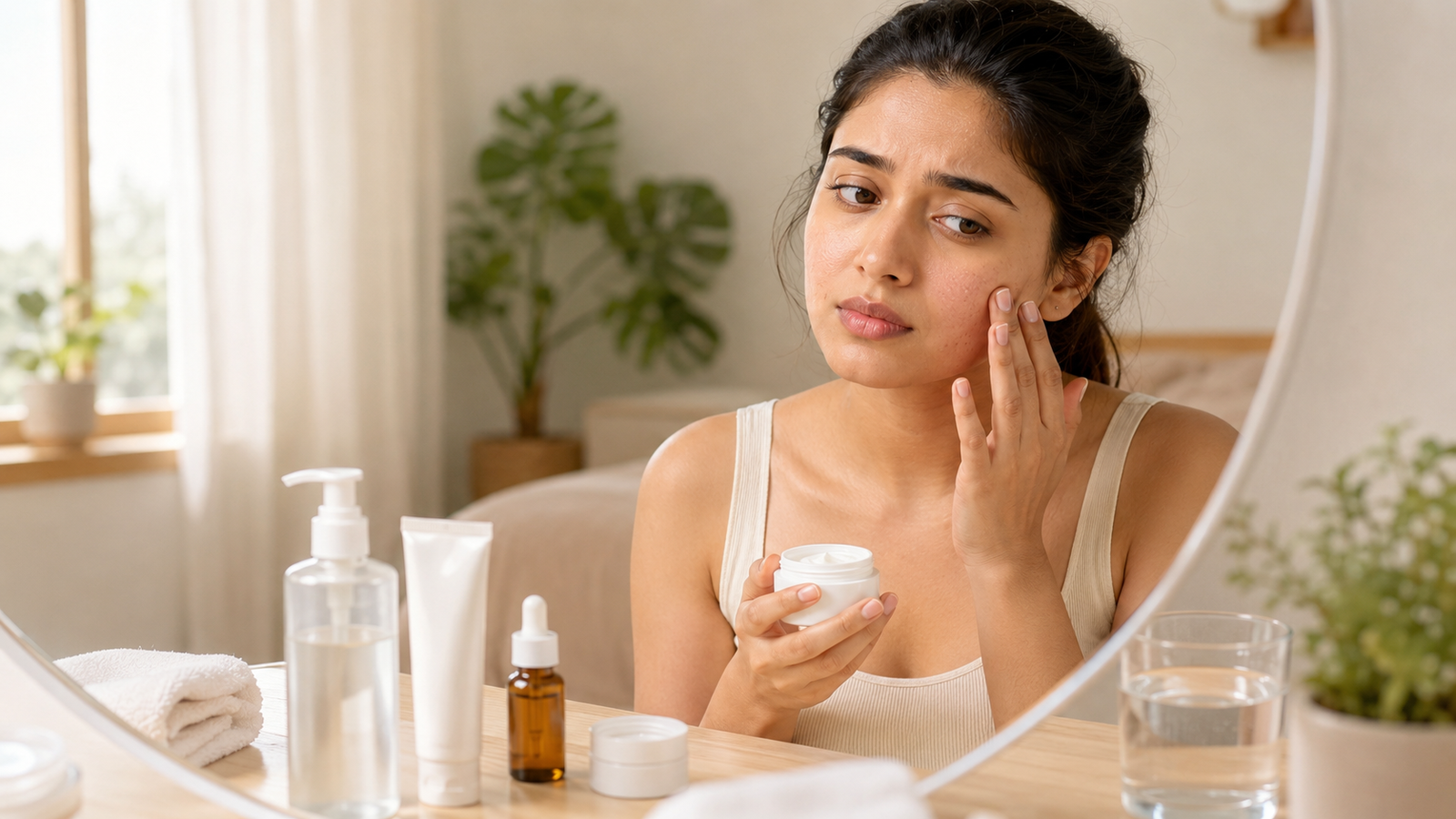
You wash your face, apply moisturizer, and for a few minutes everything feels fine. Then the tightness slowly returns. Your cheeks may start feeling rough again, makeup catches on dry patches, or your skin simply does not feel as comfortable as you expected.
It is easy to assume that your moisturizer is not good enough. Sometimes that is true, but often the problem is not the product alone. How you cleanse, when you moisturize, the weather around you, the ingredients in your routine, and even how often you experiment with new products can influence how well your skin holds onto moisture.
If your skin still feels dry after moisturizing, understanding what is happening can help you make smarter changes instead of simply buying a heavier cream.
Dry Skin Is Not Always About Using Too Little Moisturizer
Healthy-looking skin needs both water and a functioning protective barrier. Think of your skin barrier as the outer layer that helps keep useful moisture in while limiting exposure to outside irritants.
When that barrier becomes stressed, water can escape more easily. You may apply a moisturizer and enjoy temporary softness, but the dry or tight feeling can return later.
This is why adding more and more moisturizer is not always the complete answer. A better approach is to look at your entire routine and remove the habits that may be working against your skin.
1. You Are Applying Moisturizer to Completely Dry Skin
One of the simplest changes is also one of the easiest to overlook: timing.
After cleansing, many people thoroughly towel-dry their face, wait several minutes, and then apply moisturizer. Instead, try gently patting away excess water while leaving the skin slightly damp before moisturizing.
A moisturizer can help reduce water loss, so applying it while there is still some moisture on your skin can be useful. The American Academy of Dermatology also recommends applying moisturizer to damp skin after washing or bathing as part of dry-skin care.
For additional dermatologist-backed advice, read the American Academy of Dermatology's dry skin tips.
2. Your Cleanser May Be Too Harsh
A moisturizer has a harder job when your cleansing routine repeatedly leaves your face feeling stripped.
If your skin feels squeaky, unusually tight, itchy, or uncomfortable immediately after washing, pay attention to your cleanser and cleansing habits. Washing aggressively, scrubbing the face, or repeatedly cleansing without a real need can leave already-dry skin feeling worse.
Choose a gentle cleanser that suits your skin type and use lukewarm rather than very hot water. Cleansing should remove everyday dirt, excess oil, sunscreen, and other buildup without turning your routine into a battle against every trace of natural oil.
Also remember that more foam does not automatically mean better cleansing. A satisfying lather can feel effective, but how your skin behaves after rinsing matters more.
3. Hot Water Is Quietly Making Things Worse
A steaming shower can feel wonderful after a tiring day, particularly during cooler weather. Your skin may disagree.
Very hot water and long showers can contribute to dryness, especially when your skin is already struggling. Dermatologists commonly recommend shorter showers with warm water for people dealing with dry skin.
You do not need an uncomfortable cold shower. Simply turn the temperature down and avoid staying under hot water for longer than necessary.
Afterward, pat rather than vigorously rub your skin with a towel and follow with moisturizer while the skin is still slightly damp.
4. Your Moisturizer May Be Too Light for Your Current Skin
The lightweight gel that felt perfect during a humid month may not feel sufficient when the weather becomes cooler or drier. Skin needs can change with climate, season, indoor air, travel, and the rest of your routine.
Lotions, gels, creams, and ointments do not all provide the same experience. Someone with oily but temporarily dehydrated skin may enjoy a lightweight moisturizer, while persistently dry skin may feel more comfortable with a richer cream.
Rather than choosing a moisturizer because it is trending, look at how your own skin behaves several hours after application.
If your face consistently becomes tight again shortly afterward, you may need to reconsider the formula or the routine surrounding it.
5. You Are Using Too Many Active Products
Modern skincare can make a simple routine feel strangely incomplete. There is always another toner, exfoliating acid, serum, peel, mask, or treatment promising a new benefit.
Using several strong products together, however, can be difficult for some skin to tolerate. Dryness, stinging, redness, flaking, or unusual sensitivity may be signs that your routine needs simplifying.
When skin feels uncomfortable, resist the urge to immediately introduce another active ingredient. A temporary return to basics—a gentle cleanser, suitable moisturizer, and daytime sunscreen—can make it easier to identify which product may be causing trouble.
You can also explore more practical routines and skin-type guidance in the DailySkinTips skincare tips section.
6. Your Environment Is Drier Than You Realize
Sometimes your skincare routine has not changed at all, but your surroundings have.
Air conditioning, indoor heating, low humidity, windy weather, seasonal changes, and frequent travel can all change how your skin feels. You might notice that a moisturizer works beautifully during humid weather but seems less effective after spending long hours in an air-conditioned room.
Instead of assuming your skin type has permanently changed, consider what has changed around you.
During drier periods, you may benefit from adjusting your moisturizer, reducing unnecessarily harsh cleansing, and being more consistent about moisturizing after washing.
7. You Keep Switching Products Too Quickly
Skincare experimentation can become a cycle. Your face feels dry, so you buy a new moisturizer. Two days later it still feels dry, so you add a serum. Then you switch cleanser, introduce a mask, and suddenly you no longer know which product is helping or irritating your skin.
Unless a product is causing a concerning reaction, constantly changing several parts of your routine at once makes it difficult to understand your skin.
Keep things manageable. Introduce products thoughtfully and pay attention to comfort, dryness, breakouts, redness, and irritation rather than chasing an overnight transformation.
8. You May Be Confusing Dry Skin With Dehydrated Skin
The terms are often used interchangeably in casual skincare conversations, but they can describe different concerns.
Dry skin is generally associated with a lack of natural oils, while dehydration refers to a lack of water. Even skin that becomes oily can sometimes feel tight or dehydrated.
This explains why simply covering an oily-but-tight face with the richest product available is not necessarily the best solution. Your routine still needs to match your overall skin type, environment, and tolerance.
If you are acne-prone, look for moisturizers designed with breakout-prone skin in mind rather than avoiding moisturizer automatically. The American Academy of Dermatology notes that people with acne can look for labels such as oil-free or non-comedogenic when selecting a moisturizer.
9. You Forget About Sun Protection
Hydration routines should not stop at moisturizer. Your morning routine should also include appropriate sun protection.
Daily exposure happens during ordinary life: commuting, walking outside, shopping, working near daylight, or spending time outdoors. Sun protection therefore deserves a regular place in a morning skincare routine rather than being treated as something reserved for holidays.
DailySkinTips has a complete guide explainingeveryday skincare and sun-protection topics if you want to build a more complete routine.
A Simple Routine When Your Skin Keeps Feeling Dry
If your shelf is crowded with products, simplifying things can be surprisingly helpful. Start with the basics and observe how your skin responds.
Morning: Use a gentle cleanse if your skin needs it, apply your moisturizer, and finish with broad-spectrum sunscreen before daytime exposure.
Evening: Gently remove sunscreen, makeup, oil, and daily buildup. Apply moisturizer soon after cleansing instead of leaving your skin bare for a long period.
When dryness is significant, creams or ointments may retain moisture more effectively than lighter lotions. The NHS explains that emollients form a protective layer that helps trap moisture and that different formulations can suit different levels of dryness.
You can learn more from the NHS guide to emollients.
Small Habits That Can Make a Noticeable Difference
You do not necessarily need a complicated routine to make dry skin feel more comfortable. Try keeping showers shorter, choosing warm instead of very hot water, moisturizing after cleansing, and avoiding unnecessary scrubbing.
Be cautious with heavily fragranced products if your skin is already sensitive or irritated. Pay attention to how your face responds to new ingredients rather than assuming that a popular product must suit you.
Consistency matters too. Using a suitable moisturizer regularly is usually more practical than applying a large amount only after your skin has already become extremely uncomfortable.
When Dryness Deserves Professional Attention
Ordinary dryness can often improve after basic skincare adjustments, but persistent or severe symptoms should not simply be covered with more cosmetic products.
If your skin is painful, repeatedly cracking, bleeding, intensely itchy, swollen, developing a persistent rash, or becoming worse despite a gentle routine, consider speaking with a qualified dermatologist or healthcare professional.
Similarly, stop using a new product and seek appropriate advice if you develop a significant reaction. Skincare content can help you understand everyday habits, but it cannot diagnose the cause of persistent skin symptoms.
Frequently Asked Questions
Why does my face feel dry shortly after I moisturize?
Your moisturizer may be too light, your cleanser may be stripping your skin, or environmental conditions may be contributing to moisture loss. Applying moisturizer to slightly damp skin and simplifying an irritating routine may help.
Should I apply moisturizer on wet or dry skin?
Moisturizer is commonly applied after gently patting the skin so that it remains slightly damp rather than dripping wet. This can help trap some of that moisture on the skin.
Can oily skin still feel dehydrated?
Yes. Oiliness and dehydration are not necessarily opposites. Skin can produce noticeable oil while still feeling tight or uncomfortable, so choose hydration products according to your overall skin type and needs.
Can washing my face too often cause dryness?
Frequent cleansing, harsh cleansers, scrubbing, and hot water can leave some people's skin feeling dry or irritated. Use a gentle approach and cleanse according to your actual needs.
Is a cream better than a lotion for dry skin?
Richer creams and ointments generally provide more moisture retention than lightweight lotions, making them useful options for very dry skin. The best texture still depends on your skin, climate, and personal comfort.
When should I see a dermatologist about dry skin?
Seek professional advice when dryness is severe, painful, persistent, accompanied by significant itching or a rash, causes cracking or bleeding, or does not improve with sensible skincare changes.
Final Thoughts
If your skin feels dry even after moisturizing, do not assume that you simply need to apply more product. Look at the full picture: your cleanser, water temperature, moisturizer texture, active ingredients, environment, and the timing of application.
Good skincare is often less about collecting products and more about understanding what your skin actually needs. A gentle routine performed consistently can be more useful than constantly changing products whenever dryness appears.
Start with simple adjustments, watch how your skin responds, and give comfort and consistency priority. When dryness becomes persistent, painful, or unusual, professional guidance is the safer next step.