Have you ever purchased a moisturiser because it looked gentle, smelled pleasant, and promised healthier-looking skin, only to find that your face felt uncomfortable after using it? A reaction like this can have several causes, and fragrance is one factor worth considering, especially if you have a known fragrance sensitivity.
Choosing skincare products becomes easier when you know what to look for beyond attractive packaging and marketing claims. Even when a product contains no added fragrance, its other ingredients may not agree with your skin. Understanding the formula, choosing products for a clear purpose, and introducing them carefully are just as important.
Whether your skin is oily, dry, combination, or sensitive, this guide explains how to identify suitable fragrance-free skincare products, compare ingredient labels, and build an affordable daily routine in India.
What Are Fragrance-Free Skincare Products?
Fragrance-free skincare products are formulated without fragrance ingredients added to give the finished product a particular scent. Fragrance ingredients may be synthetic or derived from natural sources, and they can appear in cleansers, moisturisers, serums, sunscreens, and other cosmetics.
Many people tolerate fragranced products without any problems. Others may develop irritation or allergic contact dermatitis from particular ingredients. If a dermatologist has identified a fragrance ingredient that triggers your allergy, check product labels carefully to avoid that specific substance.
The terms “fragrance-free” and “unscented” describe different things, so it is worth checking what a product label actually means. An unscented product may contain ingredients intended to mask the smell of other components. Therefore, a product that has little noticeable scent is not necessarily free from fragrance-related ingredients.
Essential oils and aromatic botanical extracts may also matter when you are avoiding particular fragrance allergens. Natural ingredients are not automatically safer, and synthetic ingredients are not automatically unsuitable.
The best approach is to consider the complete ingredient list, your personal sensitivities, and the product's intended purpose rather than relying on one claim printed on the packaging.
Who Should Consider Fragrance-Free Skincare?
Fragrance-free products may be particularly worth considering if you have experienced repeated irritation from fragranced cosmetics, have a diagnosed fragrance allergy, or have been advised by a dermatologist to avoid certain ingredients.
They can also be a sensible option when you are trying to simplify a routine that contains many products.
However, you do not necessarily need to replace every product you already own. If your current cleanser, moisturiser, and sunscreen suit your skin, there may be little benefit in changing them without a specific reason.
People with eczema, recurring rashes, or other persistent skin concerns may need more individualised guidance. Fragrance is only one possible trigger, and repeatedly experimenting with different products can make it harder to identify the cause of a reaction.
If you develop persistent itching, swelling, burning, or a rash, stop using the suspected product and seek appropriate medical advice.
How to Read Skincare Ingredient Labels
The front of a skincare package is designed to communicate a product's benefits quickly. The ingredient list provides a better starting point for evaluating its formulation.
Check the Fragrance-Free Claim
Look for a clear fragrance-free statement and review the ingredient list where available. Terms such as “parfum” and “fragrance” can help identify fragrance-related ingredients.
Depending on your sensitivity, essential oils and aromatic botanical extracts may also need consideration. If you have a diagnosed allergy, ask a dermatologist which ingredients you should avoid rather than relying on a general label alone.
Do Not Rely Only on Marketing Terms
Words such as “natural,” “clean,” “gentle,” and “dermatologically tested” do not guarantee that a product will suit every person.
Ingredients obtained from plants can also trigger irritation or allergies in some individuals, depending on the substance and their personal sensitivity. Similarly, a synthetic ingredient may be well tolerated by many people.
Evaluate the complete formulation instead of deciding whether a product is suitable based on a single marketing claim.
Match the Formula to Its Purpose
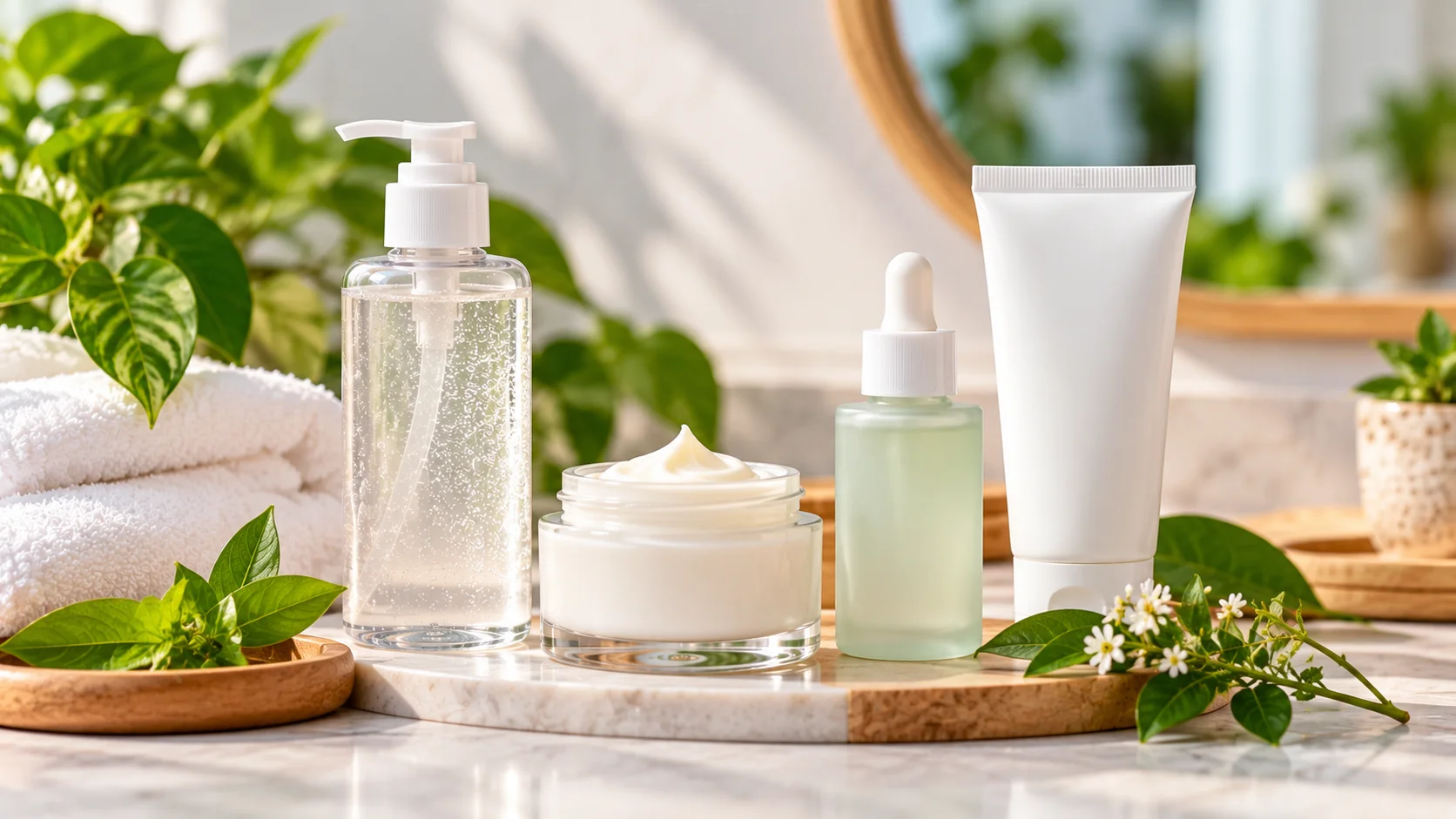
A cleanser should remove dirt, excess oil, and sunscreen without leaving your face excessively tight. A moisturiser should help maintain skin comfort. A sunscreen should provide appropriate sun protection when used according to its instructions.
These functions matter more than whether the packaging looks luxurious or the product contains a long list of trending ingredients.
Check Directions and Expiry Dates
Read the instructions for use, recommended frequency, and any precautions. Check the expiry date and follow the manufacturer's storage instructions.
Avoid using a product if its colour, texture, or smell has changed unexpectedly.
A Practical Ingredient Comparison
Different skincare ingredients serve different purposes. Use this ingredient guide to compare the roles of common skincare ingredients before choosing a moisturiser or hydrating formula that suits your skin.
| Ingredient | Main purpose | What to consider |
|---|---|---|
| Glycerin | Helps attract and retain water | Commonly used in hydrating cleansers and moisturisers |
| Ceramides | Support the skin barrier | Often included in moisturisers for dry skin |
| Hyaluronic acid | Helps bind water | Useful in suitable hydrating formulas |
| Panthenol | Provides moisturising benefits | Found in creams and lotions |
| Petrolatum | Helps reduce water loss | Useful for dry areas, although its texture may feel heavy |
You do not need every ingredient in the table. A simple moisturiser containing ingredients that suit your skin may be a better choice than purchasing several products because their ingredients are popular.
The complete formula matters, too. Two moisturisers containing glycerin may differ in texture, other ingredients, and how comfortable they feel on your skin.
How to Choose Products for Your Skin Type
For Dry Skin
Dry skin may feel rough, flaky, or tight after washing. A fragrance-free cream containing glycerin or ceramides can be a reasonable starting point. Petrolatum may also help reduce water loss in particularly dry areas.
Use lukewarm water, avoid harsh cleansing products, and apply moisturiser while your skin is slightly damp.
If your skin remains uncomfortable despite regular moisturising, consider whether your cleanser or other products are contributing to the problem. Persistent dryness may require professional assessment.
For Oily Skin
Oily skin can still become dehydrated. A lightweight fragrance-free lotion or gel moisturiser may feel more comfortable than a rich cream, particularly in hot and humid weather.
If you are prone to clogged pores, consider products labelled non-comedogenic. This can be a useful selection criterion, although it does not guarantee that a product will never contribute to breakouts.
Do not assume that skipping moisturiser will solve excess oil. Choose a formula that feels comfortable and fits your routine.
For Sensitive Skin
If your skin frequently develops redness, itching, or stinging after applying cosmetics, consider fragrance-free products and keep your routine simple.
A gentle cleanser, a suitable moisturiser, and a sunscreen that you tolerate well are reasonable essentials. Introduce unfamiliar products individually instead of changing everything at once.
Fragrance-free is a useful selection criterion, not a guarantee that a formula cannot irritate your skin.
For Combination Skin
Combination skin may be oily around the forehead and nose while feeling dry around the cheeks.
A lightweight moisturiser may work well across most of the face. If certain areas need more moisture, you can apply a richer product only where necessary.
You do not need separate products for every facial area unless there is a specific reason to use them.
For Acne-Prone Skin
People with acne-prone skin should choose products that cleanse gently and fit comfortably into their treatment routine.
Fragrance-free skincare may help reduce exposure to one potential source of irritation, but it does not treat every cause of acne.
If you already use acne medication or exfoliating treatments, avoid adding several new active ingredients without considering the possibility of dryness and irritation. Persistent, painful, or severe acne should be assessed by a qualified dermatologist.
How to Build an Affordable Skincare Routine in India
You do not need a large collection of products to build a practical routine. Start with the essentials and add specialised treatments only when you have a clear reason.
Morning Routine
- Cleanse if needed. Use a gentle cleanser suited to your skin. If you have very dry skin, consider whether a full cleanse is necessary every morning.
- Moisturise. Apply a fragrance-free lotion, gel, or cream according to your skin type and personal comfort.
- Apply sunscreen. Select a broad-spectrum sunscreen rated SPF 30 or above. Apply it according to the label, and reapply as directed after swimming, sweating, or spending time outdoors.
Evening Routine
- Cleanse gently. Remove sunscreen, makeup, and daily buildup without excessive rubbing.
- Use a treatment only if needed. A separate serum is optional. Introduce unfamiliar treatments gradually and follow their directions.
- Moisturise. Finish with a suitable moisturiser to help maintain skin comfort and reduce moisture loss overnight.
For more guidance on selecting a cleanser, read our related article: How to Choose the Right Cleanser for Your Skin Type.
India's climate can influence which textures feel comfortable. A lightweight lotion may be more pleasant in humid conditions, while a richer cream may suit dry skin or cooler weather. Your skin's needs and personal tolerance should guide the decision.
A Simple Product-Label Comparison Before You Buy
Imagine you are comparing two moisturisers at a shop.
The first has a strong floral scent and attractive packaging. The second is labelled fragrance-free and has a texture that seems suitable for your skin. Both products list moisturising ingredients.
If you are specifically trying to avoid fragrance, the second product may be the more appropriate starting point. However, the label alone does not establish that it is safer or more effective for everyone. You still need to consider its full ingredient list and any known sensitivities.
Use these questions when comparing products:
- What specific need would this product address in my current skincare routine?
- Is its texture suitable for my skin type and local climate?
- Can I identify fragrance-related ingredients that matter to my individual sensitivities?
- Have I reviewed the directions, expiry date, and precautions?
- Am I buying it to address a genuine need or simply because it is trending?
- Can I introduce it without changing several other products at the same time?
These questions provide a practical way to compare products without relying entirely on advertising claims or price.
Common Mistakes to Avoid
- Assuming fragrance-free means allergy-free. Even without added fragrance, a skincare formula may contain substances that trigger a reaction in someone with a particular sensitivity.
- Trusting the word “natural” without checking the formula. Plant-derived ingredients can also trigger reactions in some people.
- Changing the entire routine at once. Introduce unfamiliar products individually so you can better identify what your skin tolerates.
- Using too many active ingredients. Fragrance-free products can still contain exfoliants or other ingredients that cause irritation when used incorrectly.
- Ignoring sun protection. For daily UV protection, use a sunscreen designed for that purpose rather than relying on an ordinary moisturiser or serum.
- Continuing to use a product that causes a reaction. Stop using a suspected product if irritation develops. Seek medical advice if symptoms persist, recur, or become severe.
If your skin remains dry despite moisturising, our guide on Why Your Skin Feels Dry Even After Using Moisturiser may help you consider other possible contributing factors.
How to Patch Test a New Skincare Product
Testing a new product on a small area of skin may help identify some unwanted reactions before you use it more widely.
The American Academy of Dermatology recommends applying the product to a test spot twice daily for seven to ten days. Choose a small area where the product will not be washed or rubbed away. Use it as directed, including the normal application amount and contact time.
Stop the test if the area becomes irritated, itchy, or swollen. A successful home test does not rule out every possible skin reaction, including one that appears after later use.
Read the American Academy of Dermatology's guidance on testing skincare products for the complete procedure.
If you have a diagnosed contact allergy or a history of serious reactions, seek personalised advice from a dermatologist. Medical patch testing may be needed to identify particular allergens.
Frequently Asked Questions
1. Are fragrance-free skincare products better for sensitive skin?
They may be helpful for people who react to fragrance ingredients. However, sensitivity has several possible causes, and the complete formula still matters.
2. Is fragrance-free the same as unscented?
No. Unscented products may contain ingredients that mask other smells. If you are avoiding fragrance, look for a fragrance-free product and review its ingredient list.
3. Can fragrance-free products be used every day?
Products intended for daily use can generally be included according to their directions and your skin's tolerance. Introduce unfamiliar products gradually.
4. Are fragrance-free products suitable for oily skin?
People with oily skin can look for fragrance-free gel cleansers, lightweight lotions, and suitable sunscreens, choosing formulas that feel comfortable without leaving an excessively heavy finish.
5. Do fragrance-free products prevent acne?
No. Avoiding fragrance may reduce one potential source of irritation, but it does not treat every cause of acne. Persistent acne may require appropriate medical treatment.
6. Are expensive fragrance-free products more effective?
Not necessarily. Price alone does not determine whether a formula suits your skin. Focus on the product's purpose, ingredient suitability, and personal tolerance rather than packaging or price.